Posts

Showing posts with the label problem-solving activities

3651. Do Our Students Ever Think?

  I know that you want to become a good teacher. One who makes his or her students think, right?  This latter thing may seem obvious, but do our dear students really think? Do they invest all their cleverness capabilities upon learning in the best possible way?  In order to achieve our dear students would think, and more if they are kids, we have to teach them how to think. If they settle down to study their books, we may be heading in the right direction.  We as teachers may think in a loud voice, say, to teach them to think, in class.  I was remembering that when I taught kids at the first school where I began to teach, we had, in accordance to their parents, there in the nineties of last century, a plan for educating them. It was not one more school subject, like math or literature or biology, but they were weekly sessions about topics where we made them think: ethics, how to solve problems, virtues and values, situations they might face as teens, etcetera. I...

3536. Real Communication in the Classroom through Solving Problems

We second language teachers do wish our students would learn that language, right?  In my opinion the communicative approach is the best one to teach/learn a language. Even better we could follow a more eclectic approach, by taking from different language-learning methodologies.  If we want to follow a communicative method we have to create chances for real communication in the classroom.  As well we could try to implement activities where our students have to carry out diverse tasks. In those tasks the students have to use the second language in order to fulfill those aforesaid tasks.  In that way they can learn and acquire that tongue: They have the necessity of using the target tongue.  Thus they will see they are carrying on an activity which is worth to invest their best efforts in: They will feel they are doing worthy and meaningful exercises, and eventually they might get pretty motivated.  In other words: They will feel the ...

3508. Several Considerations at the Beginning of the School Year

I have met several teachers along my career as a teacher and have seen that an enthused teacher gets his students enthused over the school subject.  Those teachers plan and program their lessons. And if they’re second language teachers they achieve their students would use and utilize that language. Those teachers’ method may be communicative: the second language is employed as a vehicle for communication in the classroom.  Furthermore the classroom becomes a piece of a country where that tongue is spoken. I have seen it along my career as a teacher.  And if that teacher is not native of the second tongue, he strives to also learn and acquire it.  I knew a teacher with not much time left and he used to just learn one word or a few ones every day, every single day, with perseverance.  How to achieve the students would use the language? For example by means of jigsaw activities or puzzles where some students have an information gap to be fille...

3507. Teaching Students to Work on Their Own

Every teacher, if he or she wants to be a pretty good one, has to learn how to delegate upon their students. Clear enough, let me tell you.  Well, we must know that they can do quite much on their own. For example they have to learn how to read and understand an activity or exercise they are addressed to resolve. We teachers could tell them how to make it… but that way they will not learn and progress.  That is not against often telling them and molding them how to solve those problems or activities, and quite often we’ll have to intervene, but if we do know they already have to make it on their own… let them do it themselves.  Also in that way we’re educating them and moreover they will feel we are willing to educate them: they expect we’re letting them learn and do their business.  At those times we’re spectators of their learning process.  We could help them but… no: let them work on their own, although they might do things rather wrong: ...

3442. Making Our Students Think!

Image
We teachers have to be careful: we may be too much over-focused on teaching strategies (this is, how to teach) and somehow forget to make our students think, ponder, reason, discern, meditate.  I mean, of course we have for example to teach a second or foreign language but our students also have to learn how to think.  As well we should teach them beauty – in a landscape, a poem, a piece of fine arts… – plus the fact that any person is unreachable and some mystery: any person is someone great.  As well we should train our students at speaking in public, solving problems as a team, holding a nice conversation, explaining some concept…  And before that, before all that, or at the same time, we teachers have to practice at thinking, reasoning, pondering, meditating… In few words: teaching is great and learning as well! We may be teaching our school subject, of course, but let’s remember to make our students think! / Photo from: commuter_reading

3113. Sheer Communication in English

Image
  Today at the center where I teach grown-ups have had an interesting experience. We’ve been talking in English for an hour, from some worksheets a female student has provided to us, about healthcare for the old. Today there were only three students and they three were speaking in English rather fluently, I’d say. That’s great. We’ve discussed about how walking, brisk walking is so good for our health, when we start to become rather old. We also solved some small problems at talking in that language. The overall thing was great. In Spain more and more we are aware that mastering English is just essential, not only for getting a future job, but also for everyday conducting and relating with other people that live abroad or here in our country – we live in a globalized atmosphere, as you well know. Bilingual people or people with rather an advanced level of English are more agile and flexible regarding their minds and solving problems. It’s been a great thing: they three ...

3100. Plenty of Communication in English!

Image
  I’m concerned about the fact that with my lower-level class I utilize our mother language too much, to the detriment of English, our target tongue. I don’t know quite well but we can be using Spanish up to some 8 to 10% of the allotted time. Which is much, I’d say. And I’d like it diminish. Let’s do something: next lesson with that class is next Wednesday (because we have a long weekend, etc.) and I shall try to utilize English close to 100% of the assigned time, which is 55 minutes – so 100% is the goal, the desideratum. Albeit I'll have to explain more things in English! We have to discuss about a class problem and we’ll do it in English (I will try rather hard but gently and nicely of course). Also at tomorrow’s lesson with the higher-level class I also will try to discuss about the issue all in English. I can tell you about that small specific problem: few students can attend conversation sessions with a native speaker, namely an American volunteerin...

3069. About a Marriage I Knew

Image
  I can already tell you about a marriage I knew: they had some small quarrels and so they made the resolution of being more polite with each other. Just that. They thought it was a matter of politeness. They would treat each other more finely. And they got it! As well they let small conflicts pass away; they let time pass and when they both were more serene, they got back to more fluent communication between them two. They avoided quarreling. On coming posts I hope to tell you about some ideas I have about teaching and learning English as a foreign language. / Photo from: Abidjan in Ivory Coast. The picture is a nice illustration.

3011. Teaching with High Professionalism

Image
  When you teach English to grown-ups, you may realize that you have to also talk with them for instance to check out whether they can understand you in classes. And you can do this in English too, at a basic and easy-to-understand level, because there might be (likely so!) different levels of English and different grades of achievement. But if you discern that you need to speak in Spanish (their mother language) about this point you may speak in this their mother language, in a discussion mode, and collaborative too! With adults you have to conduct in another way than from kids, evidently! Although they’re adults likely they’ll put themselves in your hands, and they, well, some of them, will accept whatever you tell them: they will be content with whatever you do in classes. Let’s be honest and morally correct: let’s give them a lot, and avoid giving them less than they deserve. They deserve good and very professional classes, ones taught with a lot of professionalis...

2834. Educating Leaders!

Image
  It’s interesting for us teachers that we should help our students form their will. Their will is going to be essential to become accomplished citizens! And the will is formed and educated through repetition of actions, good ones, which make up their personalities. We teachers have to help them choose what is good and do it with freedom, discernment and the subsequent responsibility. This latter one will help them become thorough citizens, ones that will lead society, and all this is in our hands, teachers! And has to be in their hands alike, because they have to be the free subjects of their own will and actions... All this is to be treated at tutoring sessions but also at everyday classes, tomorrow Monday's classes for example! / Photo from: gente-en-la-calle medicinapreventiva info

1473. Group working, how to learn to work

Image
Teacher A said to teacher B, “Working in small groups is plumb essential: they learn to cooperate toward a common goal.  You can practice this way of working if you teach them or, better said, you give them some prompts and clues and suggestions. In this way they learn how to work in a group: turn taking, brainstorming, delivering tasks among the members of the group.  The groups could be of 3 people: in some way you assure that tentatively all of them will do some tasks, they will carry out the project by the 3 of them cooperating.  Naturally one of them 3 will be the leader.” / Photo from:  students learning www oru edu

918. Asking for help

Image
One day teacher of English A said to teacher of English B, “One way of making the students communicate in the target language has to do with the functional methodology. The teacher has to provoke saying something in English, the target language. The teacher describes in the first language a situation, a realistic one, where the student has to use English to communicate about what this latter one needs, or wishes, or demands, protests, shows gratitude, just says a statement, etc. For example, ‘María, ¿cómo expresarías en inglés la necesidad de que tienes que cambiar los pañales al bebé, en el aeropuerto?’, which is ‘María, how would you show the necessity you have to change your baby’s diaper?’. And t he student could say, ‘Excuse me sir, where can I change my baby’s diaper?’ Like you see, I used translation: sometimes it is necessary and helpful, but use it not too much.” / Photo from: chagrinvalley times com. By Joan Demirjian us. police officer on duty

875. Solving problems as a class activity

Image
    One day teacher of English A said to teacher of English B, “Solving problems can be an activity that helps practice and play with the English language as a vehicle to do something else.   For example, some weeks ago both my students and I had got to decide what date we should finish the classes of a course. I’m referring to a course I’ve taught this year to adult learners whose end date could be discussed and fixed among all of us: between the end of May and the end of June.   To be honest we fixed the date partially in Spanish, our mother tongue. Still, I think this activity could be a good example of problem-solving activities. In our case: I let them know I was available until the end of June, and they could say their preferences, desires, doubts, problems to keep on attending the classes, another learner could say she might attend the course until the last Wednesday of June, and so on.   This activity is ideal for training learners for...

841. Have your students think

Image
One day teacher of English A said to teacher of English B, “I think carrying out a project-work at school is a pretty good activity within part of the essence of school: learning to learn and think. Drills and speaking in English are good practice in the class. However, don’t forget the major aptitudes of your students, for example thorough thinking. This thinking will push up their process of acquiring English toward a high level. One possible activity: assign your student to make up groups of three, or set the groups yourself, to carry out a project-work. A topic might be the recent history of your country and its influence on today’s society. The goal could be that one or all of the members of the team should present that issue by means of utilizing the smart board. The duration may be 45 minutes. Their age? 15 years onward. You can tell them some clues before the actual making up the project-work, as examples of possible steps they could implement during the ...

823. Observing things from another angle

Image
One day teacher of English A said to teacher of English B, “Often, I believe, the best manual and handbook for me, teacher, to continue learning my dearest job is my students themselves. Imagine now a teacher that is at hand of his students’ all the time, that he’s attentive to the way they’re carrying out a project work or an exercise in the class, by small groups, for instance: he is continuously learning about the way his students think, their strong points, their weak ones, the way the students face up with problems, who the leader is. In this way the teacher is recycling his way of teaching, and alike viewing the topics also from their students’ points of view. I can assure you that a big part of what I know as a teacher has come from my students, not only from books and the Web - which are indispensable though.” / Photo from: brisbanecbdhotels blogspot com. Brisbane shines even in the wet. Brisbane, Queensland, Australia      

687. A virgin island

Image
One day teacher of English A said to teacher of English B, “Activities which our students have to speak in can constitute good preparation for their future careers. One example from my experience: In one of the academic years at Centro de Lenguas Modernas , of Universidad de Granada , we the students had to discuss about possible projects to be set up in a virgin island in the middle of the ocean. It’s an exercise where the students have to talk fluently and with versatility. It’s interesting because of this versatility: the learners are able to present their proposals and discuss about their reasons. It can be fun. One can suggest some environmental friendship resource to conserve and study the island’s species, one can propose to make money out of the leisure resources the island can offer, another student proposes to set up something suitable for the elderly. That discussion can provide fun and joking when talking about someone’s original project. The students have got t...

647. Communication in the class connects people

Image
One day teacher of English A said to teacher of English B, “Look, one practical tip for your classes, concerning communication in English. When you don’t know a word in English – you’re not a native speaker of this language, but really need to say that word, what to do? I try to explain the word, in English; I try to explain the meaning, because I want to carry on communicating in English and not translate into L1. So, I say the concept, the meaning, the notion of the word; maybe examples of the word whose concept I want to describe; also, if convenient, the use for, the material, shape, color, even by means of a drawing, by means of gestures. This is also an activity you can make your students practice: they explain the meaning of a word they don’t know. I think this is sensible, because communication is held totally in English. I learned this technique from a colleague of ours. Give it a try, and let me know.” / Photo from: centrodenegociosretiro com

644. Using English for communication. More games

Image
One day teacher of English B said to teacher of English A, “On post #259 I gave you a lot of activities and games that may help our students play with English, and construct sentences or texts in English. With passing months and years I’ve invented more games/activities and as well learned from the reactions and ways of doing things by the students themselves. On label ‘more games’ in this blog you can find some more. Now I offer some new games, briefly: 1. The teacher invents and tells a simple story, by speaking, with 3 or 4 words the students provide; young students are very imaginative. 2. One student says a sentence with one word he or she has learned lately in the classes. 3. Elicit and give terms related with computers and the Internet. 4. They say, by turns, words that include one letter, but which words don’t begin with that letter. You can write them on the board; students like to see filling with columns of words by themselves; it’s like a competition. 5. They, with your ass...

635. Enhancing the students' work

Image
One day teacher of English A said to teacher of English B, “Group working can bolster our students’ creativity. The groups should be of three members – for example – so as more easily rope each member into the work. Men and women are social by nature, and people often work in groups. If all the students contribute to the process and final result of the work, this result may be a nice consequence of each student’s creativity. Also you can find more things about group working at the labels ‘problem-solving activities’ and ‘project-works’. Working in teams can help the students become more aware of the importance of their work.” / Photo from: jpacte learningcentered org

622. A beautiful landscape

Image
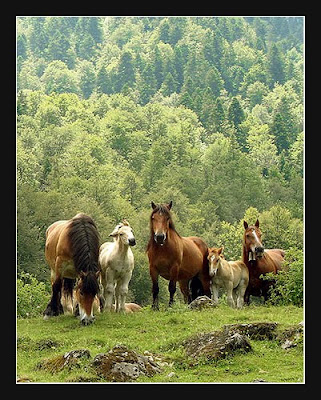
One day teacher of English A said to teacher of English B, “Problem-solving tasks is a very useful activity to practice authentic speaking in English, and also to learn new vocabulary. I’ve done this activity with my students a few times. It’s great, look. Once a task to carry out was about what to build and what not in a beautiful natural landscape. A few students performed different roles: I think to remember one was a realtor, one an environmental scientist, one was a big wheel of certain company... It was a brief activity. They had to discuss on their opinions of what to build, like for example something to just raise money, or setting a leisure place, or a natural park, or something to create posts of work. In that activity, I confess, I didn’t make the students prepare something to say beforehand, previous to the actual performing in front of their classmates. I had fun when hearing their things. Evidently you can set a more basic activity like just talking about the school to a...